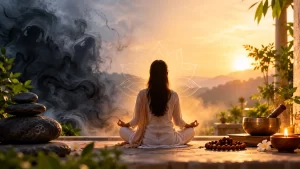
Mantra chanting is an important practice in Hindu spirituality, meditation, prayer, and devotional traditions. Many people chant mantras as part of their daily routine to develop concentration, maintain spiritual discipline, and create a peaceful environment for meditation. While a mantra can generally be recited at different times of the day, traditional practices often recommend certain periods because they are considered particularly suitable for prayer and meditation.
Mantra is one of the core practices of tantra. Learn how mantra, yantra and sadhana work together in our complete guide to tantra.
The best time to chant mantras can depend on the type of mantra, the purpose of the practice, individual routine, and the spiritual tradition being followed. Early morning, particularly Brahma Muhurta, is traditionally regarded as an especially favorable period for meditation and spiritual practices. Sunrise, sunset, and evening are also commonly chosen for mantra chanting.
Table of Contents
ToggleWhat Is the Best Time to Chant Mantras?
For a general daily mantra practice, early morning before or around sunrise is traditionally considered one of the most suitable times. During this period, the surroundings are often quieter, making it easier to sit peacefully and focus on the mantra.
However, there is no universal rule that every mantra must be chanted at a particular time. Some mantras have specific traditional guidelines regarding timing, pronunciation, number of repetitions, or initiation. If a particular spiritual tradition prescribes a specific time, following that tradition is preferable.
For people with busy schedules, choosing a consistent time when they can practice without interruption can be more useful than waiting for a supposedly perfect time.
Best Times for Mantra Chanting
1. Brahma Muhurta
Brahma Muhurta is traditionally considered one of the most favorable periods for meditation, prayer, study, and other spiritual practices. It occurs before sunrise and is generally associated with the quiet early-morning hours.
The peaceful environment during this period can make it easier to concentrate and establish a contemplative mindset. Devotees who follow traditional practices may use this time for mantra jaap, meditation, prayer, or scripture recitation.
The exact clock time of Brahma Muhurta changes according to the local sunrise, so it is not a fixed time such as 4:00 AM every day.
2. Early Morning After Bath
Another commonly preferred time for mantra chanting is the early morning after completing personal hygiene or bathing. Beginning the day with prayer or mantra meditation can help establish a focused and disciplined routine.
Many people find morning chanting convenient because there are usually fewer distractions before daily responsibilities begin. A quiet environment can also make it easier to concentrate on pronunciation and meaning.
3. Sunrise
Sunrise is traditionally an important period for several forms of Hindu prayer and spiritual practice. Mantra chanting around sunrise can be incorporated into a morning meditation or puja routine.
Mantras associated with the Sun, such as the Gayatri Mantra, are traditionally connected with morning spiritual practices. However, the appropriate timing can vary according to the specific mantra and tradition.
4. Midday
Certain spiritual traditions also prescribe or permit mantra practice around midday. The suitability of this time depends on the particular mantra and the practitioner’s routine.
For people who cannot practice in the morning, a short midday session can be a practical way to maintain consistency. A quiet place and focused attention are more important for many general devotional practices than choosing a specific clock time.
5. Sunset
Sunset is another traditionally significant period for prayer and meditation. The transition between day and night is often considered suitable for spiritual reflection.
Evening mantra chanting can be especially useful for people who are unable to maintain an early-morning practice. It can provide a dedicated period to slow down, focus the mind, and conclude the active part of the day with prayer.
6. Evening or Before Bed
Mantra chanting can also be incorporated into an evening routine. Repeating a familiar mantra quietly before bedtime may provide a peaceful transition from daily activities to rest.
People who prefer evening practice should choose a comfortable setting and avoid treating the practice as a competition to complete a large number of repetitions. A short, consistent session can be easier to maintain over time.
Why Is Brahma Muhurta Considered the Best Time for Mantra Chanting?
Brahma Muhurta has a special place in traditional Indian spiritual practices. The period occurs before sunrise and is traditionally associated with a calm and relatively undisturbed atmosphere.
Spiritual practitioners may use this period for meditation, yoga, prayer, mantra chanting, and scriptural study. The early hour can also naturally reduce external distractions, which may help practitioners focus their attention.
The idea that mantra chanting produces specific supernatural or guaranteed results at a particular time is a matter of spiritual belief rather than an established scientific fact. The practical value of early-morning practice can also come from regularity, quietness, and focused attention.
Does the Time of Day Change the Power of a Mantra?
Traditional spiritual systems may assign particular timings to specific mantras and rituals. However, it is not accurate to claim that a mantra becomes universally “more powerful” simply because it is chanted at a particular clock time.
The experience and traditional significance of mantra chanting can depend on the mantra, the practitioner’s intention, pronunciation, concentration, and spiritual tradition. For a general daily practice, choosing a time that allows consistent and focused chanting is often a practical approach.
Best Time to Chant Different Types of Mantras
Different mantras may have different traditional associations. For example, the Gayatri Mantra is commonly associated with morning prayer and sunrise practices. Shiva mantras such as Om Namah Shivaya may be incorporated into daily worship at different times. The Mahamrityunjaya Mantra is also widely used in Shiva worship and can be included in a devotional routine according to one’s tradition.
Some specialized mantras have detailed rules regarding time, direction, pronunciation, initiation, and repetition. Such practices are best learned from an appropriate teacher or within the relevant tradition rather than following generic online instructions.
How Long Should You Chant Mantras?
There is no single duration that applies to everyone. Beginners can start with a short session of around 5 to 10 minutes and gradually increase the duration if it feels comfortable.
Some practitioners prefer counting repetitions with a mala, while others practice for a fixed amount of time. Traditional practices may prescribe specific numbers depending on the mantra.
The goal should be to develop a regular practice rather than focusing only on completing a particular number of repetitions.
How Many Times Should a Mantra Be Chanted?
The number of repetitions depends on the mantra and the tradition. 108 repetitions are commonly used in many mantra practices because traditional malas often contain 108 beads.
However, 108 is not a mandatory number for every mantra or every practitioner. Someone beginning a daily practice can choose a manageable number and gradually develop consistency.
For formally prescribed mantra sadhana, the repetition count should be based on the guidance associated with that particular practice.
How to Create a Daily Mantra Chanting Routine
Creating a consistent routine is often more important than constantly changing the time or mantra. Choose a quiet place where you can sit comfortably and remain undisturbed. Select a mantra appropriate to your spiritual practice and learn its correct pronunciation and meaning.
Start with a manageable duration or repetition count. Sit comfortably, maintain your attention on the mantra, and return your focus to the mantra whenever the mind wanders. A mala can be used if you prefer to count repetitions.
Most importantly, try to practice at approximately the same time each day. Regularity can make it easier to develop mantra chanting into a long-term spiritual habit.
Should You Chant Mantras Before or After Bath?
Many traditional Hindu practices recommend bathing or maintaining physical cleanliness before formal prayer and mantra practice. This is particularly relevant to specific puja and ritual practices.
For a general meditation or devotional routine, however, the most important consideration is maintaining a comfortable and respectful practice. Someone who cannot bathe immediately after waking may still choose to sit quietly and meditate or chant according to their personal tradition.
Can Mantras Be Chanted at Night?
Yes, many mantras can be included in an evening or nighttime spiritual routine. Mahashivratri, for example, is traditionally associated with night-long Shiva worship and spiritual practices.
However, certain specialized mantras may have specific traditional rules concerning timing. Therefore, the general recommendation for nighttime chanting should not be applied to every mantra without considering its particular tradition.
Can You Chant Mantras Anytime?
For many common devotional mantras, chanting can be incorporated into different parts of the day. The important factors can include attention, pronunciation, consistency, and respect for the tradition.
If your schedule does not allow morning chanting, there is no need to abandon the practice entirely. A consistent evening or other suitable time may be a better option than an irregular practice performed only when the ideal time is available.
Common Mistakes to Avoid While Chanting Mantras
One common mistake is focusing entirely on the number of repetitions while ignoring pronunciation and attention. Another is constantly changing mantras without developing familiarity with any particular practice.
People should also avoid assuming that every mantra has identical rules. Some mantras are simple devotional chants, while others belong to specialized traditions with specific requirements.
It is also better to avoid exaggerated claims that chanting a particular mantra at a particular time will automatically guarantee wealth, health, success, or other outcomes.
Frequently Asked Questions
Which is the best time to chant mantras?
Early morning, particularly around the traditional period of Brahma Muhurta and sunrise, is widely regarded as a favorable time for general spiritual practices. However, the best practical time is one that allows you to practice regularly and with concentration.
Can I chant mantras after sunrise?
Yes. Many devotional mantras can be practiced after sunrise. The exact timing depends on the mantra and the tradition being followed.
Is Brahma Muhurta the best time for mantra chanting?
Brahma Muhurta is traditionally considered an especially favorable period for meditation, prayer, and mantra practice because of its quiet early-morning environment.
Can I chant mantras at night before sleeping?
Yes, many people include mantra chanting in their evening routine. However, specialized mantras may have specific traditional timing requirements.
How many times should I chant a mantra?
The number depends on the mantra and spiritual tradition. 108 repetitions are common in many practices, but they are not universally mandatory.
Can I chant Om Namah Shivaya at any time?
Om Namah Shivaya is widely used as a devotional Shiva mantra and can be incorporated into a daily spiritual practice. Specific formal practices may have additional traditional guidelines.
Is morning chanting better than evening chanting?
Morning chanting is traditionally preferred for many spiritual practices, but evening chanting can also be meaningful. Consistency and focused attention are important considerations when establishing a personal routine.
Conclusion
The best time to chant mantras depends on the mantra, spiritual tradition, purpose, and personal routine. Traditionally, Brahma Muhurta and the early morning around sunrise are considered particularly favorable for meditation and mantra practice because the environment is generally quiet and conducive to concentration. Sunset and evening are also commonly used for prayer and devotional practices.
Rather than focusing only on finding a supposedly perfect time, it is better to develop a regular practice that fits your daily life. Choose an appropriate mantra, understand its meaning, maintain correct pronunciation, and practice with attention and consistency. For specialized mantra practices with specific rules, following guidance from a knowledgeable teacher or the relevant tradition is recommended.